Deadlift
Deadlift Lockout: Finish With Hips and Knees, Not a Backward Lean
Fix a missed deadlift lockout by identifying whether the bar, knees, hips, grip, or start position caused the slowdown.
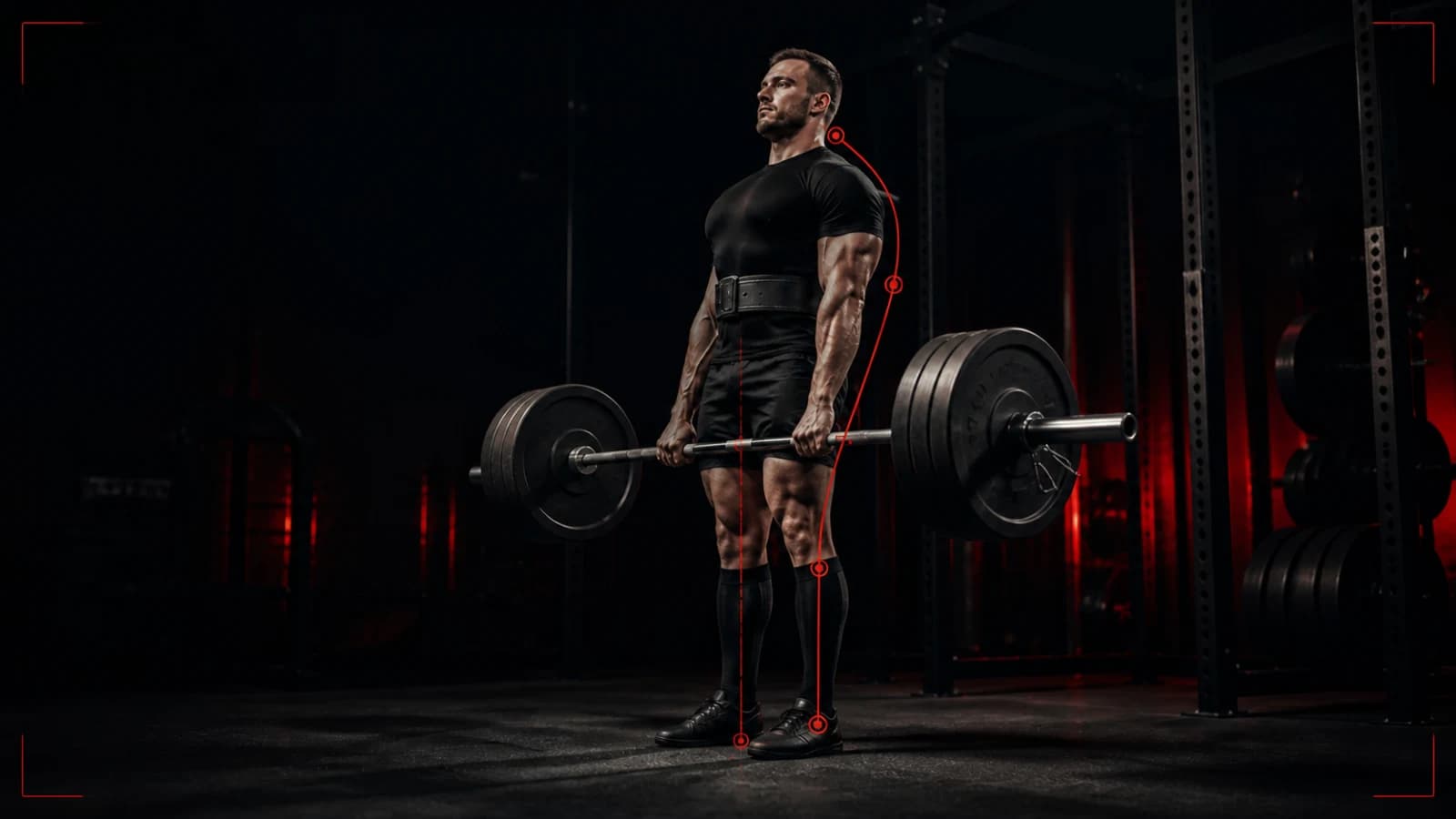
A complete deadlift lockout brings the knees and hips to extension while the athlete stands upright with the bar under control. It does not require leaning backward or rolling the shoulders. If you miss near the top, review what happened earlier: bar drift, lost lat tension, knees moving under the bar too soon, weak hip extension, or a grip that opened before the body finished.
Use a qualified coach, secure collars, a clear platform, and loads you can control. End the set when you cannot maintain control of the bar and platform.
Know what a finished lift looks like
At lockout, stand tall with the chest and pelvis stacked, knees straight, hips extended, arms long, and bar against the thighs. Keep the bar still until the down command in competition.
The International Powerlifting Federation technical rules govern current competition standards. Check your federation’s exact commands and judging language before a meet.
Diagnose where the miss began
| What the video shows | Likely review point | Next technical task |
|---|---|---|
| Bar moves forward below knee | Lat tension and start balance | Keep the bar connected to the legs |
| Knees straighten early, torso stays down | Floor push and timing | Continue pushing while the bar passes knee |
| Knees move forward under bar too soon | Knee-hip sequencing | Let the bar clear the knees before finishing |
| Bar reaches thigh but hips stay behind | Hip extension | Finish by bringing hips to bar, not shoulders back |
| Hands open near top | Grip and bar control | Use suitable grip work and lower load |
The visible sticking point is not always the cause. A bar that drifts one inch forward at mid-shin can become a lockout problem several moments later.
Keep the bar close
Engage the lats before the pull and keep the arms long. As the bar rises, maintain contact or very close proximity to the legs. Forward drift increases the moment arm at the hip and makes the top harder.
Do not scrape the bar into the body by bending the elbows. Set the upper back and let the legs and hips move the bar.
Clear the knees before you finish
Push the floor away and preserve the torso position through the first pull. As the bar passes the knees, drive the hips forward and let the torso rise. Do not rebend the knees aggressively under the bar; in competition that can also create a downward movement or hitching concern.
Think “stand tall” rather than “lean back.” A backward lean can move the shoulders behind the hips without improving knee or hip extension.
Choose assistance work from the cause
Paused deadlifts below or at the knee can expose bar drift and position loss. Romanian deadlifts can build controlled hip hinging. Block pulls can overload a shorter range, but they will not automatically fix a poor start from the floor.
Choose one variation because it matches the video diagnosis, not because it is commonly called a lockout exercise. Keep competition-style deadlifts in the programme so the correction transfers to the whole lift.
Review grip without hiding technique
If the bar rolls, check hand placement, chalk rules, bar knurling, and the grip your federation permits. Grip fatigue can end a good pull, but straps in every heavy training set may hide the problem if you compete without them.
Ask a coach to balance specific grip work with recovery. Do not hold maximal deadlifts longer than the session requires merely to prove grip strength.
A lockout review checklist
- Confirm the bar starts over the midfoot.
- Check whether it stays close below the knee.
- Watch when the knees straighten.
- Watch when the hips begin moving toward the bar.
- Confirm the final position is tall, not leaned back.
- Change one cause in the next set.